
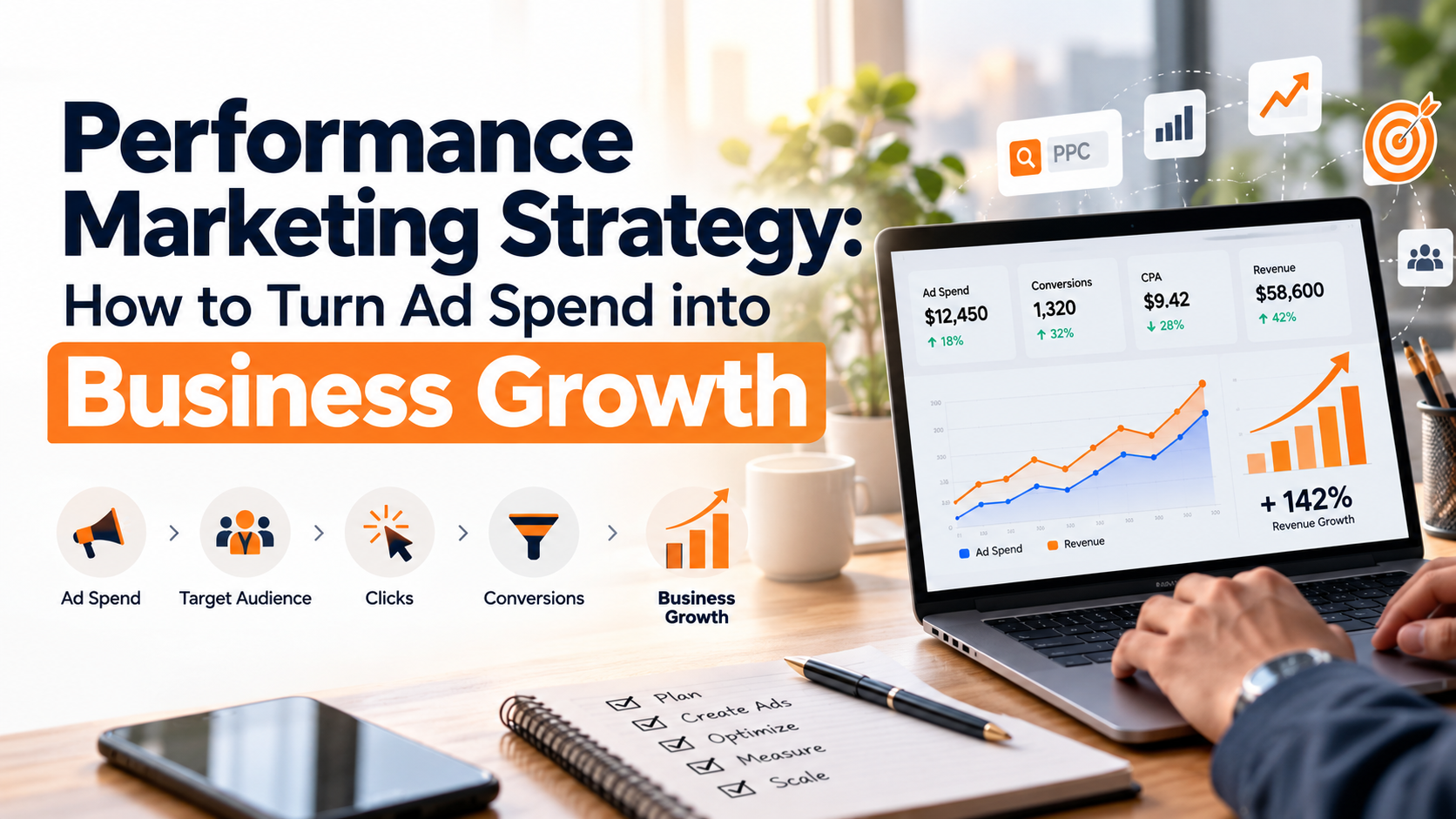
In today's competitive digital landscape, businesses need more than just advertising to achieve sustainable growth. They need a strategy that connects every marketing investment with measurable business outcomes. This is where performance marketing plays an important role. A well-planned performance marketing strategy helps businesses reach the right audience, optimize advertising budgets, generate qualified leads, and improve conversions. Instead of focusing solely on clicks and impressions, it emphasizes results that contribute to business objectives. From paid search campaigns to social media advertising, every activity needs a clear purpose. With the right approach, businesses can identify growth opportunities, make data-driven decisions, and maximize the value of their advertising spend.
Performance marketing is a results-driven approach to digital advertising in which campaigns are planned, monitored, and optimized around specific business objectives. These objectives may include lead generation, website conversions, online sales, app installations, or customer acquisition. Unlike advertising approaches that primarily focus on brand exposure, performance marketing emphasizes measurable actions and campaign outcomes. Businesses can track metrics such as cost per lead, conversion rate, customer acquisition cost, and return on ad spend to understand how effectively their campaigns are performing. However, successful performance marketing involves more than running advertisements. It requires audience research, strategic planning, compelling creatives, accurate conversion tracking, and continuous optimization. When these elements work together, businesses can identify what drives results and make informed decisions about their marketing investments.
Every advertising investment should contribute to a larger business objective. Performance marketing helps businesses connect their digital campaigns with measurable outcomes and identify opportunities to improve efficiency.
Better Budget Utilization
Performance marketing provides insights into which channels, keywords, and advertisements deliver stronger results. Businesses can use this information to allocate their budgets strategically, reduce unnecessary spending, and prioritize campaigns that contribute to their objectives.
Targeted Audience Reach
Reaching the right audience is essential for generating meaningful results. Performance marketing allows businesses to target potential customers based on search intent, interests, demographics, and online behaviour. Relevant targeting can improve the chances of connecting with people who are more likely to convert.
Measurable Results
With appropriate tracking and reporting, businesses can evaluate campaign performance using metrics such as cost per lead, conversion rate, customer acquisition cost, and return on ad spend. These insights make it easier to understand campaign effectiveness and identify areas that need improvement.
Continuous Optimization
Performance marketing enables businesses to test different advertisements, audience segments, bidding strategies, and landing pages. Regular analysis helps identify what works best and allows campaigns to evolve based on actual performance data.
Scalable Business Growth
Once campaigns demonstrate consistent results, businesses can explore opportunities to expand their reach and increase advertising investment. Monitoring acquisition costs, lead quality, and profitability helps ensure that scaling efforts remain aligned with business goals.
A successful performance marketing strategy combines business understanding, audience insights, effective campaign execution, and ongoing optimization. The following steps can help businesses build a structured approach to digital growth.
1. Define Clear Business Objectives
Every effective campaign begins with a clear understanding of what the business wants to achieve. Whether the objective is generating qualified leads, increasing online sales, improving customer acquisition, or driving website conversions, the campaign strategy should reflect that goal. Defining key performance indicators (KPIs) helps establish measurable targets and provides a framework for evaluating success.
For example, a lead generation campaign may prioritize cost per qualified lead, while an e-commerce campaign may focus on revenue, average order value, and return on ad spend. Clear objectives ensure that campaign decisions remain connected to meaningful business outcomes.
2. Understand Your Target Audience
Effective advertising starts with understanding the people you want to reach. Audience research helps businesses identify customer needs, purchasing motivations, challenges, interests, and decision-making behaviour. These insights can guide campaign messaging, creative development, and advertising channel selection. By aligning advertisements with audience expectations, businesses can create more relevant campaigns and improve the likelihood of meaningful engagement. Analysing website behaviour, search queries, customer feedback, and previous campaign data can also reveal opportunities to refine targeting and improve communication.
3. Choose the Right Advertising Channels
Different advertising platforms serve different purposes. Selecting the right channels depends on the target audience, business objectives, available budget, and customer journey.
● Google Ads: Helps businesses connect with users actively searching for relevant products or services. Search campaigns can capture existing demand, while display and video campaigns can support awareness and remarketing.
● Meta Ads: Facebook and Instagram advertising can help businesses build awareness, generate leads, promote products, and reconnect with interested audiences.
● LinkedIn Ads: Supports business-to-business marketing by helping brands reach professionals, decision-makers, and specific industries.
● Remarketing Campaigns: Help businesses reconnect with previous website visitors and interested audiences, subject to applicable consent requirements and platform policies.
Rather than advertising across every available platform, businesses should prioritize channels that align with their objectives and provide opportunities to reach relevant customers.
4. Create Compelling Ad Creatives and Messaging
Even well-targeted campaigns need advertisements that communicate value clearly. Headlines, visuals, offers, and calls to action should capture attention and give audiences a compelling reason to engage. Businesses should focus on customer benefits rather than relying on generic promotional messages. Clear communication helps potential customers understand what is being offered and why it is relevant to them. Testing different headlines, creative formats, offers, and calls to action can reveal which messages generate stronger engagement and conversions. Consistency between the advertisement and the landing page is equally important. When users find what they expect after clicking an ad, the overall experience becomes more relevant and effective.
5. Optimize Landing Pages for Conversions
Driving traffic to a website is only one part of the marketing process. The next step is converting that traffic into meaningful actions. A well-optimized landing page should communicate the offer clearly, load quickly, work seamlessly across devices, and provide a straightforward path to conversion. Businesses can improve landing page performance by:
● Using a clear headline that aligns with the advertisement.
● Highlighting the primary benefits of the product or service.
● Including a prominent and relevant call to action.
● Reducing unnecessary form fields and distractions.
● Ensuring a smooth mobile browsing experience.
● Adding relevant testimonials, credentials, or case studies where available.
Reviewing visitor behaviour, form completion rates, and conversion data can help identify barriers that prevent users from taking action. By improving the landing page experience, businesses can generate more value from the advertising traffic they already pay for.
6. Track Performance and Analyse Data
Data-driven decision-making is central to performance marketing. Accurate conversion tracking helps businesses understand how users interact with advertisements and whether campaigns are meeting their objectives. Tools such as Google Analytics 4, Google Ads conversion tracking, and advertising platform analytics can provide useful insights into campaign performance when configured appropriately. Some important metrics to monitor include:
● Click-Through Rate (CTR): Measures the percentage of impressions that result in clicks.
● Conversion Rate: Shows the percentage of users who complete a desired action.
● Cost Per Lead (CPL): Measures the average advertising cost required to generate a lead.
● Customer Acquisition Cost (CAC): Measures the cost of acquiring a customer across relevant marketing and sales activities.
● Return on Ad Spend (ROAS): Measures attributed advertising revenue relative to advertising expenditure.
No single metric provides a complete picture of campaign effectiveness. Businesses should also evaluate lead quality, sales outcomes, and profitability to understand the actual contribution of their advertising efforts.
7. Test, Optimize, and Scale
Performance marketing is an ongoing process of learning and improvement. Campaign performance can change due to competition, audience behaviour, creative fatigue, and market conditions. Regular campaign reviews help identify underperforming keywords, ineffective creatives, expensive audience segments, and opportunities to improve conversions. A structured testing process may include comparing ad variations, refining audience segments, testing bidding strategies, and improving landing page content. Once campaigns deliver consistent results, businesses can increase investment gradually while monitoring acquisition costs, lead quality, and profitability. Scaling should be guided by evidence rather than the assumption that a larger advertising budget will automatically produce better results.
Pay-per-click (PPC) advertising is an important component of performance marketing. It allows businesses to display advertisements across platforms such as search engines and pay when users click on eligible ads.
For businesses looking to capture existing demand, PPC campaigns can provide access to audiences actively searching for relevant products or services. Effective keyword research, audience targeting, compelling ad copy, and conversion tracking can help improve campaign efficiency. Partnering with a professional PPC advertising company can help businesses plan campaign structures, identify relevant search opportunities, optimize bidding strategies, and monitor results consistently.
Experienced PPC advertising agencies focus on more than generating clicks. They evaluate whether advertising traffic contributes to qualified leads, sales, and other meaningful business outcomes. A well-managed PPC campaign also benefits from regular keyword analysis, negative keyword management, creative testing, and landing page optimization. These activities help businesses identify wasted spending and make more informed decisions about budget allocation. When PPC advertising is integrated with a broader performance marketing strategy, businesses can develop a more coordinated approach to customer acquisition and business growth.
Selecting the right agency can make a significant difference to how businesses plan, execute, and evaluate their digital campaigns. The right partner should understand the business, its target audience, competitive landscape, and growth objectives.
When comparing the best performance marketing agencies, businesses should consider the following factors.
Strategic Understanding
The agency should understand your business model, customer journey, and commercial objectives before recommending advertising channels or campaign structures. A tailored strategy is more useful than a one-size-fits-all approach.
Data-Driven Execution
Campaign decisions should be supported by accurate tracking, meaningful insights, and regular performance analysis. This helps businesses understand why campaigns are performing in a particular way and what can be improved.
Transparent Reporting
Clear reporting allows businesses to understand where their advertising budgets are being used and what outcomes they are generating. Reports should focus on relevant performance metrics rather than presenting numbers without business context.
Conversion-Focused Approach
Effective performance marketing considers the complete customer journey, including ad messaging, landing page experience, lead quality, and sales outcomes. This helps ensure that campaign optimization supports business objectives.
Continuous Improvement
Advertising performance requires regular monitoring and refinement. Look for an agency that tests new approaches, evaluates campaign data, and adapts strategies based on changing audience behaviour and market conditions.
Realistic Expectations
A reliable agency should communicate campaign goals, potential challenges, and performance indicators clearly. Be cautious of guaranteed returns or promises of immediate success, as results depend on several factors, including competition, pricing, customer demand, and the quality of the offer. The right performance marketing agency should combine strategic thinking, analytical capabilities, and creative execution to help businesses make informed decisions and pursue sustainable growth.
Even well-funded campaigns can underperform when important strategic elements are overlooked. Avoiding common mistakes can help businesses improve efficiency and make better use of their advertising budgets.
Focusing only on clicks: High website traffic does not necessarily translate into qualified leads or sales. Campaigns should be evaluated against meaningful business outcomes.
Ignoring landing page experience: Slow, confusing, or irrelevant landing pages can reduce conversions even when advertisements attract the right audience.
Using broad targeting without a clear strategy: Poor audience relevance can increase costs and attract users who are unlikely to convert.
Making decisions without sufficient data: Frequent changes based on limited information can make it difficult to identify genuine performance trends.
Overlooking lead quality: A low cost per lead may appear attractive, but it has limited value if those leads rarely become customers.
Scaling budgets too quickly: Increasing advertising expenditure before validating campaign performance can amplify inefficiencies and raise acquisition costs.
Ignoring attribution: Customers may interact with multiple marketing channels before making a purchase. Evaluating only the final click can create an incomplete understanding of the customer journey.
Avoiding these mistakes requires a disciplined approach to campaign management, accurate measurement, and continuous improvement.
Performance marketing is most effective when strategy, creativity, technology, and data work together towards a common objective. From identifying the right audience to optimizing campaigns and measuring conversions, every step plays a role in improving marketing effectiveness.
At Substance Digital, a strategic approach to digital marketing helps businesses align their advertising campaigns with their broader growth objectives. By combining audience insights, relevant messaging, campaign optimization, and performance measurement, businesses can identify opportunities to improve their marketing efforts.
Whether your objective is to generate qualified leads, increase online sales, or improve the efficiency of your existing campaigns, a well-planned performance marketing strategy can help you make better use of your advertising budget.
Looking to turn your ad spend into measurable business growth? Connect with Substance Digital to explore a performance marketing strategy tailored to your business objectives.
Let's Connect
Don't wait until tomorrow. Talk to one of our consultants today and learn how to start leveraging your business.